
Living in Miami means living with hurricane season as a genuine annual reality, not a distant possibility. From June through November, the threat of a storm serious enough to require evacuation, extended power outages, or days of disrupted routine hangs over the entire South Florida calendar. Your vehicle plays a critical role in how smoothly you navigate whatever the season brings, whether that means evacuating ahead of a major storm or simply getting through the aftermath of one that passes nearby. Getting your car properly prepared before hurricane season peaks is one of the most practical things a Miami driver can do each year.
Why Vehicle Readiness Matters More During Hurricane Season
When a storm approaches, gas stations empty quickly, roads can become congested with evacuation traffic, and mechanical help becomes much harder to find as shops close and technicians deal with their own storm preparations. A vehicle that develops a problem during this window, whether that is a weak battery, worn tires, or a cooling system already showing signs of stress, becomes a much bigger liability than the same issue would be during ordinary conditions. This is exactly why hurricane season deserves its own dedicated vehicle check rather than simply hoping your car holds up when you need it most.
Battery Health Should Be Checked Early In The Season
A weak battery is one of the most common causes of a no start situation, and discovering this problem in the middle of evacuation preparations, when you may already be racing against a shrinking timeline, is far worse than catching it in a calm moment weeks earlier. Miami’s intense summer heat, which overlaps directly with the early part of hurricane season, accelerates battery degradation on its own, meaning a battery that seemed fine in spring can already be weakened by the time storm season is in full swing.
Having your battery tested proactively at the start of hurricane season, rather than waiting for a warning sign, gives you the chance to replace a marginal battery well before you might actually need to rely on it for an emergency departure. If you have already experienced a starting failure, our guide on the top 10 reasons your car won’t start and how to get back on the road covers a range of causes worth understanding regardless of the season.
Tires Need To Be Ready For Both Evacuation And Flooded Roads
Adequate tread depth matters considerably more during hurricane season, since evacuation routes often involve extended highway driving at a moment when road conditions may already be deteriorating from early storm bands. Worn tires reduce traction on wet pavement precisely when you may be driving through the first heavy rain associated with an approaching system. Checking tread depth and tire pressure before the season’s first real storm threat gives you one less variable to worry about if evacuation becomes necessary.
It is also worth confirming that your spare tire, if your vehicle carries one, is properly inflated and in usable condition. A spare that has been ignored for years and quietly lost pressure is not something you want to discover for the first time while already trying to leave the area ahead of an approaching storm, when a roadside tire shop may already be closed or overwhelmed with other drivers in the same situation.
Fuel System And Fluid Levels Deserve Extra Attention
Keeping your gas tank closer to full throughout hurricane season, rather than waiting until it is nearly empty to refuel, is a habit worth adopting given how quickly gas stations can run dry once a storm warning is issued. This is less about a mechanical check and more about a routine adjustment that removes one significant source of stress during an actual evacuation scenario.
Checking coolant, oil, and other essential fluids before the season ramps up ensures your vehicle is not already running on marginal fluid levels heading into a period when you may need to rely on it for an extended drive out of the area, potentially covering more distance in a single trip than your normal daily routine ever requires.
What To Do If Your Vehicle Was Exposed To Flooding
Even a vehicle that avoids direct storm damage can end up dealing with standing water on Miami streets during and after a significant rain event. If your vehicle has been driven through deep standing water, or has been parked somewhere that experienced flooding, it is worth having it inspected before assuming everything is fine, since water intrusion can affect electrical connections, the undercarriage, and in more serious cases, the engine itself in ways that are not always immediately obvious.
A vehicle that has taken on water through the air intake, sometimes called hydrolock, can suffer serious internal engine damage if it is started again without a proper inspection first. If you suspect your vehicle may have driven through water deep enough to reach this level, it is worth having it checked before attempting to start it again, rather than risking further damage by assuming the engine is fine simply because it seems to be running normally at first.
Building A Basic Emergency Kit Into Your Vehicle
Beyond mechanical readiness, keeping a basic emergency kit in your vehicle during hurricane season, including items like a flashlight, phone charger, water, and a few days of any necessary medications, ensures you are prepared if evacuation traffic leaves you stationary for longer than expected, or if you need to shelter in your vehicle temporarily during an unexpected situation.
Why A Mobile Mechanic Fits Hurricane Season Prep Well
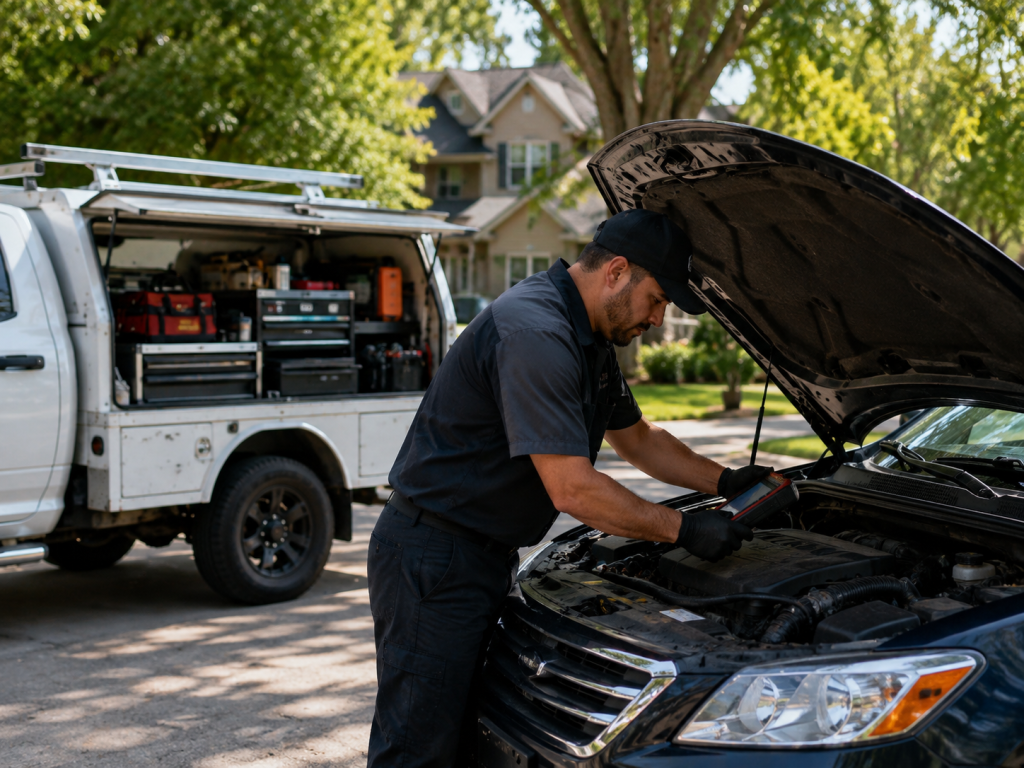
Given how unpredictable hurricane season timing can be, having a technician come to your home or workplace for a proactive pre season check is often more practical than trying to schedule a shop visit once a storm is already approaching and everyone else in Miami is scrambling to prepare at the same time. A mobile mechanic can check your battery, tires, fluids, and overall readiness well ahead of the season’s peak, without adding another errand to your list during an already busy time.
We covered the broader advantages of this approach in our article on why mobile mechanics are better than traditional auto shops in Miami, which explains how convenience and flexible scheduling come together, particularly valuable heading into another Atlantic hurricane season.
Prepare Now, Before The Season Peaks
Hurricane season is not something Miami drivers can avoid, but showing up unprepared when a storm actually threatens is entirely avoidable with a bit of proactive attention early in the season. Checking your battery, tires, fluids, and overall vehicle readiness before the first real storm threat arrives gives you one less thing to worry about when it matters most, and it turns a potentially stressful last minute scramble into something you handled calmly weeks in advance.
If it has been a while since your vehicle had a proper checkup, visit our homepage to learn more about our services, or reach out through our contact us page to schedule a hurricane season readiness check at your home or office anywhere in the Miami area.
A little preparation now can make a genuine difference in how smoothly you navigate whatever this hurricane season brings.